قارن بتجاربك الشخصية
- في نقاش حديث، هل ساعدك الحديث مع الآخرين على توضيح أفكارك؟
- هل ساعدك البحث عن الأنماط والاحتمالات على فهم مهمة حديثة؟
- هل ساعدتك مقارنة المعايير غير الشخصية في قرار حديث؟
- هل ساعدك وضع خطة وتنظيم الخطوات على الوفاء بالتزام حديث؟

Commander · The Executive

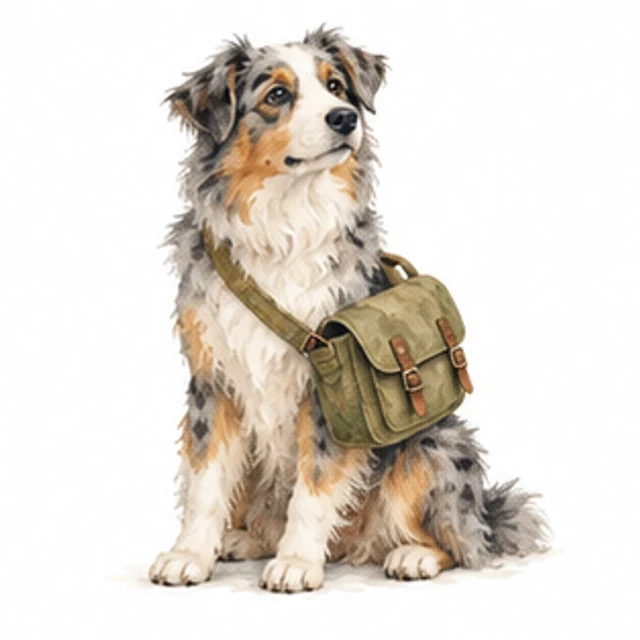


The Expedition Leader
A new climbing route, and a plan to get everyone there.
The Expedition Leader
Satchel packed, route checked, and room in the plan for the whole crew.
The Meadow Captain
A packed basket turns plans into a day out.
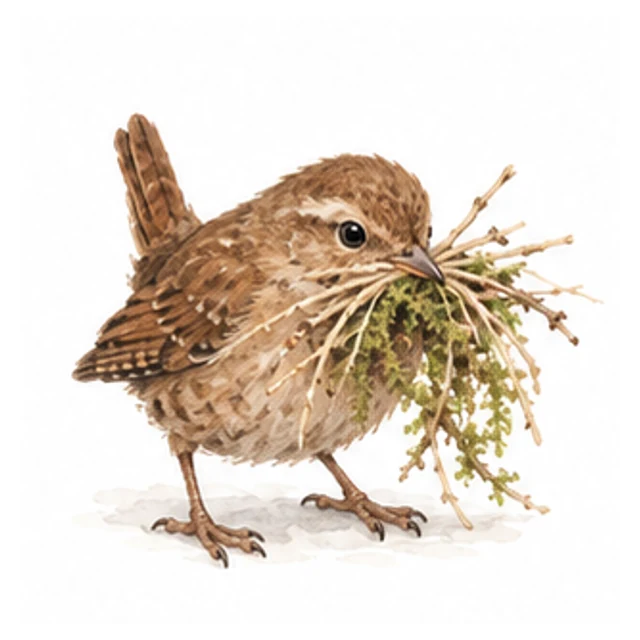
The Nestyard Organizer
Gathered nest materials wait in useful little bundles.
The Log Raft Builder
The driftwood is ready; now the raft can take shape.
ENTJ: E (الانبساط: الانتباه إلى الناس والأنشطة في العالم الخارجي), N (الحدس: ملاحظة الأنماط والاحتمالات), T (التفكير: استخدام معايير غير شخصية عند اتخاذ القرارات), J (الحكم: تفضيل التنظيم والتخطيط في العالم الخارجي). في هذه النظرية تصف الأحرف التفضيلات، وليس قدرات مقاسة أو عيوبًا أو قيمة الشخص.
Myers & Briggs Foundation يشرح المصدر مصطلحات النظرية، ولا يثبت صلاحية OpenJung أو فعالية هذه الأسئلة.
This result guide and its practice choices are currently shown in English.
This type page has no personal scores or recorded assessment details. Choose a practice that fits a real situation; you do not need to identify with this type.
Off by default; all features work with it off. Send test starts and completions (quick, full or Jev), practice and reflection saves, returns, and Jev assistance request, candidate shown, accept, dismiss, unavailable, helpful or unhelpful events to this site with random browser, event and attempt IDs. No Jev descriptions, answers, scores or results are sent; records expire within 35 days.
Retention and how to turn this offFictional character scenes
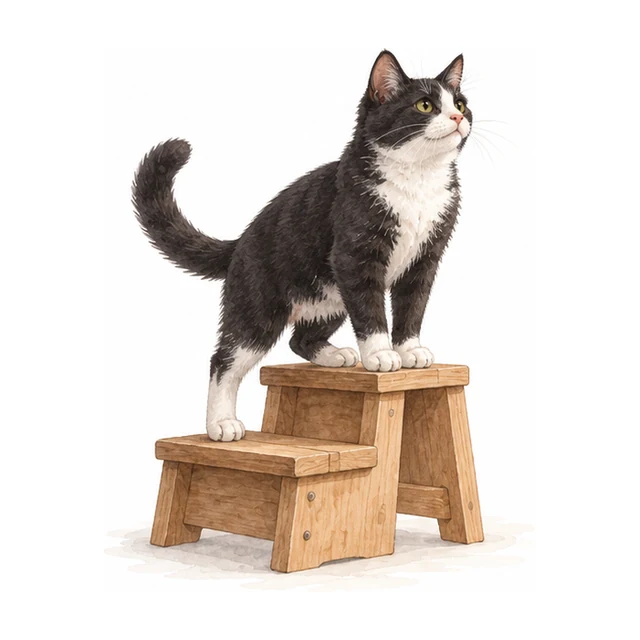
Surveys the climbing shelf, plans a new route, then takes a well-earned nap.
Invites everyone on a little expedition and checks that the pace works for the group.
An imagined character for a little self-expression. These scenes do not describe every person of this type or change your assessment.
Fictional character scenes
Checks the expedition satchel, surveys the path, then rests before departure.
Keeps the group together on the trail and pauses when someone wants a breather.
An imagined character for a little self-expression. These scenes do not describe every person of this type or change your assessment.
Fictional character scenes
Checks the packed basket beneath an oak, then pauses before setting out.
Divides the supplies with a friend and leads the way to the meadow.
An imagined character for a little self-expression. These scenes do not describe every person of this type or change your assessment.
Fictional character scenes
Sorts grass, moss, and twigs, then rests beside the finished bundles.
Helps a friend choose a sturdy twig and carries the moss alongside them.
An imagined character for a little self-expression. These scenes do not describe every person of this type or change your assessment.
Fictional character scenes
Lines up driftwood logs, then rests on the bank before tying them.
Assigns a log to a friend and builds a sturdy little raft side by side.
An imagined character for a little self-expression. These scenes do not describe every person of this type or change your assessment.
This sources and revision note is shown in English.
Scores summarize questionnaire answers. Percentages are scale positions, not accuracy or the probability of being a type. A type profile without scores is not a personal assessment.
OEJTS 1.2 questionnaire (PDF) Pages 1–3: license, 32 items and scoring rules for the source questionnaire. This is not a validation study of OpenJung, its quick test or translations.
OEJTS development “Item generation and evaluation” describes selection using self-identified types; “Versions and other downloads” links to version 1.2. This is development history, not validation of this adaptation.
Type descriptions and cognitive-function order are interpretive frameworks. This questionnaire does not directly measure functions, abilities, maturity or relationship compatibility.
Myers & Briggs Foundation: type dynamics “Terminology of Type Dynamics” and “Order of the Mental Processes” explain terms in that framework. They do not verify this site’s individual trait claims or establish personal stress mechanisms.
Myers & Briggs Foundation: the processes of type dynamics “The Eight Dominant Processes” supports the eight card definitions as theory terminology only. “Tertiary Process (Third Process)” describes disagreement about its orientation. Neither validates OpenJung or the editorial examples and questions.
Career questions, stress prompts and small actions are editorial suggestions to try in a real situation. They are not measured findings about you, treatments or promises of improvement. Cat scenes are fictional illustrations.
Record updated:
The recorded edits and source checks were AI-assisted (Amp). No independent expert review is recorded; this date is not a certification date.
Function-position wording and relationship recommendations were corrected. Career and stress advice, unsourced public-figure assignments and an INFJ growth entry were also corrected. Practical copy covers English, Simplified/Traditional Chinese, Japanese and Korean, with explicit English fallback elsewhere.
The 16 profile descriptions explain the four preference letters, with concrete experience and counterexample questions. Type, result and comparison pages use the same copy in all 44 interface languages, including matching titles and search summaries. The added translations are AI-assisted and have not received independent native-language or expert review. This is not psychometric validation.
Type-page reflection prompts and the /growth guides now use shared optional practices and observation questions. The five translated guides collect three exercises and two fictional scenarios each. They do not assign function training, stress mechanisms or personal deficits by type; scenarios are labelled fictional. This is an editorial correction, not evidence that the practices are effective.
Eight cognitive-function cards now distinguish sourced definitions from hypothetical examples and optional experience/counterexample questions in five languages, with labelled English fallback. Function nicknames and ability/deficit lists were removed. Type/result, learning-card and comparison displays use explicit theory boundaries; function order and scoring are unchanged.
The learning page now uses 16 explicitly fictional scenarios with alternative explanations and a 12-question terminology/boundary bank. Each eight-question round reports correct-answer counts only. Explanations distinguish source terminology from OpenJung editorial boundaries. Overview, metadata and five-language UI use the same scope, with labelled English fallback elsewhere. This is an AI-assisted editorial revision, not expert review or validation.
The function-stack exercise now identifies matches and unlisted orders only within the site’s unchanged 16-entry mapping. Position names, opposite pairs and disputed tertiary orientation have scoped sources. Five-language instructions and keyboard interactions were checked; this is not a personal assessment or validation of the mapping.
Type nicknames, temperament group names, and other untranslated content have not received a full source-by-source review. Lifestyle lists were removed rather than rewritten; Guess-the-Type scenes remain fictional mapping drills, not function identification. The independent mobile dataset has not been updated. These edits do not establish independent expert review or a validation study.
GitHub issues are public. The draft includes only the public page, type and language—not scores, answers or private result links. Add only the relevant excerpt and source.
تستكشف هذه الأسئلة الاختيارية جانبي كل زوج من التفضيلات، وليست قائمة بمزاياك وعيوبك. تذكّر موقفًا محددًا وظروفه. قد يناسبك جانب واحد أو كلاهما أو لا يناسبك أي منهما.
This cognitive-function content is shown in English.
A theoretical lens on preferences; these functions are not directly measured by this questionnaire.
The order is a theoretical mapping, not measured skill or frequency. Conventions for the tertiary orientation differ.
Position terminology: Myers & Briggs Foundation (not validation of this questionnaire)In type dynamics, “dominant” names the process given the leading role in this type’s theoretical pattern. It does not establish your strongest skill. Compare the description with your own experience.
In Myers-Briggs type-dynamics terminology, Te seeks logic and consistency in external laws and rules.
Definition source: Myers & Briggs Foundation“The Eight Dominant Processes”; definitions and terminology only, not validation of individual abilities or OpenJung.
These hypothetical examples and questions are written by OpenJung. Use or skip any prompt. Both the experience and counterexample may fit, or neither may fit. They do not measure or train cognitive functions.
Suppose a group uses stated criteria to compare three plans.
When have shared rules helped you compare options?
When did your own reasoning matter more than the stated criteria?
English
Try a small, realistic task or role and talk with someone who does the work. Compare options using what you learn about the tasks, training, conditions, and constraints—not your type label.
English
Start with a recent event and choose any topic. These optional editorial prompts are the same for every type, not an assessment of your traits or a sequence of maturity levels.
You can simply reflect or skip a practice that does not fit. Notice no change or other explanations too; an exercise does not guarantee improvement.
The guide offers shared optional exercises and fictional examples, not a validated development program.
English
These optional prompts can be used by people of any type. They do not explain or diagnose your current state.
هذه المعلومات لأغراض تعليمية فقط ولا ينبغي اعتبارها نصيحة نفسية مهنية.