ISTP

Virtuoso · The Craftsman

ISTP Virtuoso character ISTP Virtuoso characterISTP Virtuoso characterISTP Virtuoso characterISTP Virtuoso characterISTP Virtuoso character

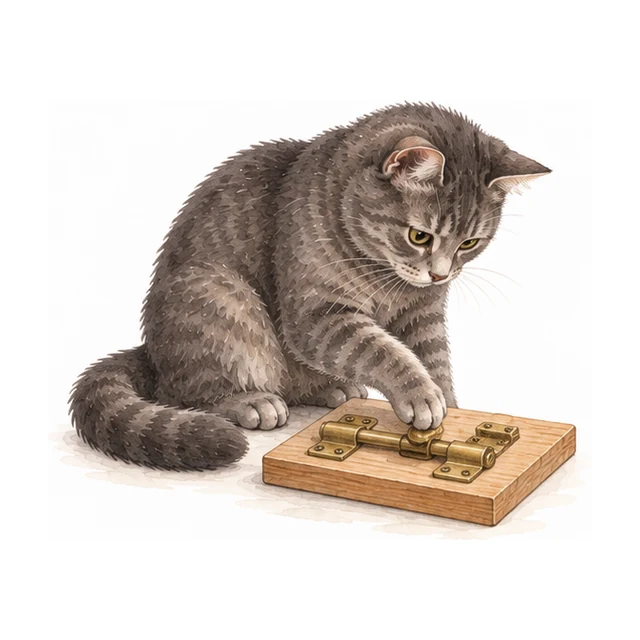
The Little Tinkerer

A paw, a latch, and one practical experiment.

The Branch Experimenter

This branch balances differently depending on exactly where one paw goes.

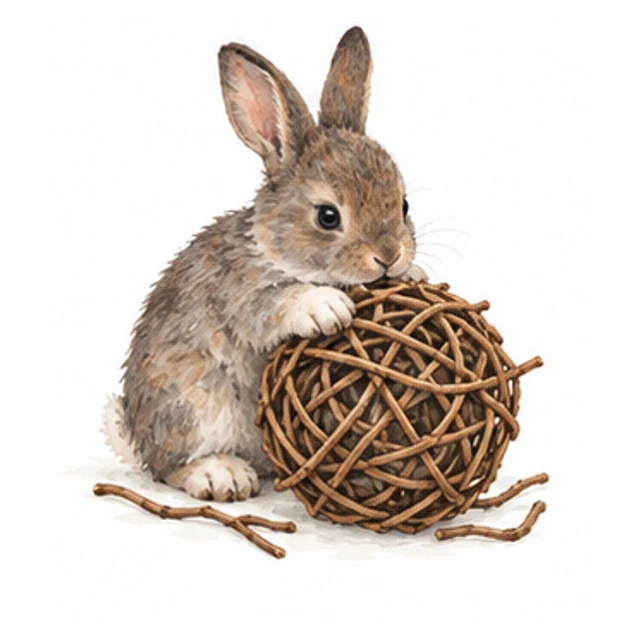
The Twig Weaver

A few woven twigs become something sturdy.

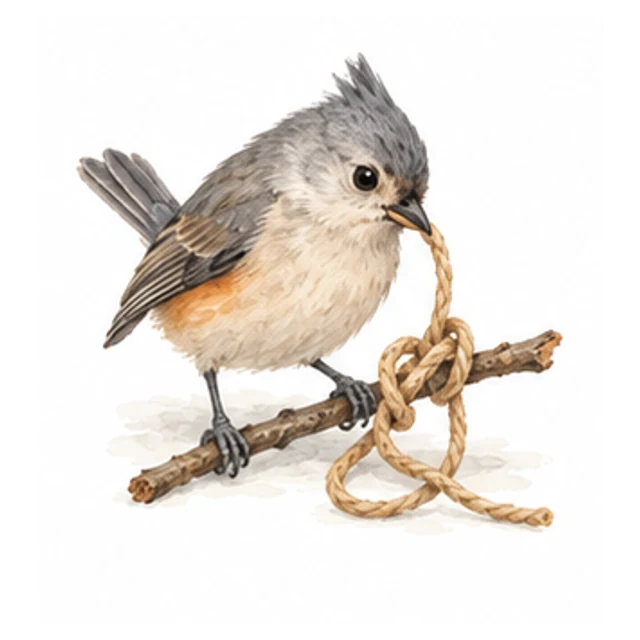
The Knot-and-Twig Maker

A knotted string and twig become a clever little perch.

The Twig-Tool Maker

The right notch turns a plain twig into a useful tool.

ארבע האותיות בתאוריית הטיפוסים

ISTP: I (מופנמות: תשומת לב להתבוננות פנימית ולרעיונות), S (חישה: מידע מוחשי ופרטים בהווה), T (חשיבה: שימוש באמות מידה לא אישיות בקבלת החלטות), P (תפיסה: העדפת גמישות ואפשרויות פתוחות בעולם החיצוני). בתאוריה הזו האותיות מתארות העדפות, ולא יכולות שנמדדו, חסרונות או ערך אישי.

Myers & Briggs Foundation המקור מסביר את מונחי התאוריה; הוא אינו מאמת את OpenJung או את יעילות השאלות האלה.

A type description is a starting point

This result guide and its practice choices are currently shown in English.

This type page has no personal scores or recorded assessment details. Choose a practice that fits a real situation; you do not need to identify with this type.

Scores and how to read them
Choose one small practice

Pick what would help in your next conversation or decision. These are options to try, not prescriptions for a personality type.

Explore more practices

What would you like to work on?

Add a situation or time (optional)

Up to 300 characters. Local date and time, 2000–2099; past plans are allowed. No reminders.

Saved on this browser, without an account. Research and usage sharing can stay off.

Off by default; all features work with it off. Send test starts and completions (quick, full or Jev), practice and reflection saves, returns, and Jev assistance request, candidate shown, accept, dismiss, unavailable, helpful or unhelpful events to this site with random browser, event and attempt IDs. No Jev descriptions, answers, scores or results are sent; records expire within 35 days.

Retention and how to turn this off

Fictional character scenes

With cats

A moment to recharge

Tests the drawer latch with one patient paw, then steps back to see what changed.

With a friend

Helps retrieve a lost toy and stays around for a low-key game afterward.

An imagined character for a little self-expression. These scenes do not describe every person of this type or change your assessment.

Fictional character scenes

With dogs

A moment to recharge

Turns a fallen branch over, tests its balance, and pauses to inspect the result.

With a friend

Shows a friend the best place to grip it, then joins in a quiet game of tug.

An imagined character for a little self-expression. These scenes do not describe every person of this type or change your assessment.

Fictional character scenes

With rabbits

A moment to recharge

Tests each twig, weaves a small frame, then rests beside the woodpile.

With a friend

Shows a friend where to tuck the last flexible twig into place.

An imagined character for a little self-expression. These scenes do not describe every person of this type or change your assessment.

Fictional character scenes

With birds

A moment to recharge

Tests the string knot, adjusts the twig, and rests when it holds.

With a friend

Shows a friend where to pull while they repair a loose end together.

An imagined character for a little self-expression. These scenes do not describe every person of this type or change your assessment.

Fictional character scenes

With otters

A moment to recharge

Carves one careful notch in a twig tool, then tests it beneath the reeds.

With a friend

Hands it to a friend, watches their grip, and trims the handle to fit.

An imagined character for a little self-expression. These scenes do not describe every person of this type or change your assessment.

This sources and revision note is shown in English.

Sources and editorial scope

Questionnaire results

Scores summarize questionnaire answers. Percentages are scale positions, not accuracy or the probability of being a type. A type profile without scores is not a personal assessment.

OEJTS 1.2 questionnaire (PDF) Pages 1–3: license, 32 items and scoring rules for the source questionnaire. This is not a validation study of OpenJung, its quick test or translations.

OEJTS development “Item generation and evaluation” describes selection using self-identified types; “Versions and other downloads” links to version 1.2. This is development history, not validation of this adaptation.

Type theory

Type descriptions and cognitive-function order are interpretive frameworks. This questionnaire does not directly measure functions, abilities, maturity or relationship compatibility.

Myers & Briggs Foundation: type dynamics “Terminology of Type Dynamics” and “Order of the Mental Processes” explain terms in that framework. They do not verify this site’s individual trait claims or establish personal stress mechanisms.

Myers & Briggs Foundation: the processes of type dynamics “The Eight Dominant Processes” supports the eight card definitions as theory terminology only. “Tertiary Process (Third Process)” describes disagreement about its orientation. Neither validates OpenJung or the editorial examples and questions.

Optional practice

Career questions, stress prompts and small actions are editorial suggestions to try in a real situation. They are not measured findings about you, treatments or promises of improvement. Cat scenes are fictional illustrations.

Record updated:

The recorded edits and source checks were AI-assisted (Amp). No independent expert review is recorded; this date is not a certification date.

What was checked

Function-position wording and relationship recommendations were corrected. Career and stress advice, unsourced public-figure assignments and an INFJ growth entry were also corrected. Practical copy covers English, Simplified/Traditional Chinese, Japanese and Korean, with explicit English fallback elsewhere.

The 16 profile descriptions explain the four preference letters, with concrete experience and counterexample questions. Type, result and comparison pages use the same copy in all 44 interface languages, including matching titles and search summaries. The added translations are AI-assisted and have not received independent native-language or expert review. This is not psychometric validation.

Type-page reflection prompts and the /growth guides now use shared optional practices and observation questions. The five translated guides collect three exercises and two fictional scenarios each. They do not assign function training, stress mechanisms or personal deficits by type; scenarios are labelled fictional. This is an editorial correction, not evidence that the practices are effective.

Eight cognitive-function cards now distinguish sourced definitions from hypothetical examples and optional experience/counterexample questions in five languages, with labelled English fallback. Function nicknames and ability/deficit lists were removed. Type/result, learning-card and comparison displays use explicit theory boundaries; function order and scoring are unchanged.

The learning page now uses 16 explicitly fictional scenarios with alternative explanations and a 12-question terminology/boundary bank. Each eight-question round reports correct-answer counts only. Explanations distinguish source terminology from OpenJung editorial boundaries. Overview, metadata and five-language UI use the same scope, with labelled English fallback elsewhere. This is an AI-assisted editorial revision, not expert review or validation.

The function-stack exercise now identifies matches and unlisted orders only within the site’s unchanged 16-entry mapping. Position names, opposite pairs and disputed tertiary orientation have scoped sources. Five-language instructions and keyboard interactions were checked; this is not a personal assessment or validation of the mapping.

What remains unreviewed

Type nicknames, temperament group names, and other untranslated content have not received a full source-by-source review. Lifestyle lists were removed rather than rewritten; Guess-the-Type scenes remain fictional mapping drills, not function identification. The independent mobile dataset has not been updated. These edits do not establish independent expert review or a validation study.


Report a content issue

GitHub issues are public. The draft includes only the public page, type and language—not scores, answers or private result links. Add only the relevant excerpt and source.

השאלות האלו הן לבחירתכם ובוחנות את שני הצדדים של כל צמד העדפות. זו אינה רשימת יתרונות וחסרונות שלכם. היזכרו באירוע מסוים ובנסיבותיו. ייתכן שיתאים צד אחד, שניהם או אף אחד.

השוו לחוויות שלכם

  • לפני שיחה שהתקיימה לאחרונה, האם זמן לבד עזר לכם להבהיר את המחשבות?
  • האם עובדות ופרטים מוחשיים עזרו לכם להבין משימה לאחרונה?
  • האם השוואת אמות מידה לא אישיות עזרה לכם בהחלטה לאחרונה?
  • האם שמירת אפשרויות פתוחות והסתגלות עזרו לכם לעמוד בהתחייבות לאחרונה?

חפשו גם דוגמאות נגדיות

  • בשיחה שהתקיימה לאחרונה, האם דיבור עם אחרים עזר לכם להבהיר את המחשבות?
  • האם חיפוש דפוסים ואפשרויות עזר לכם להבין משימה לאחרונה?
  • האם התחשבות בערכים ובהשפעה על אנשים עזרה לכם בהחלטה לאחרונה?
  • האם תכנון ומבנה עזרו לכם לעמוד בהתחייבות לאחרונה?

Cognitive functions

This cognitive-function content is shown in English.

Type theory uses these terms to describe preferences. This questionnaire does not directly measure cognitive functions.

This order comes from theory, not measured skill or frequency of use. Theories differ on whether the tertiary function is introverted or extraverted.

Position terminology: Myers & Briggs Foundation (not validation of this questionnaire)

In type dynamics, “dominant” names the process given the leading role in this type’s theoretical pattern. It does not establish your strongest skill. Compare the description with your own experience.

In Myers-Briggs type-dynamics terminology, Ti seeks internal consistency and logic among ideas.

Definition source: Myers & Briggs Foundation“The Eight Dominant Processes”; definitions and terminology only, not validation of individual abilities or OpenJung.

OpenJung wrote these hypothetical examples and questions. Use or skip any prompt. You may recall experiences that fit both sides, or neither. These prompts do not measure or train cognitive functions.

Hypothetical example

Suppose you compare two explanations and check whether each conclusion follows from its premises.

Reflect on an experience

When have you checked an explanation for internal contradictions?

Consider a counterexample

When did an external rule or result matter more than internal coherence?

English

Career exploration questions

Try a small, realistic task or role and talk with someone who does the work. Compare options using what you learn about the tasks, training, conditions, and constraints—not your type label.

  • Which tasks hold your interest when you actually try them?
  • Which skills do you already use, and what training would the next step require?
  • What pace, autonomy, teamwork, or structure helps you work well?
  • What constraints must your choice account for, such as pay, location, schedule, access, or caregiving?

English

Reflect on a real situation

Start with a recent event and choose any topic. These optional editorial prompts are the same for every type, not an assessment of your traits or a sequence of maturity levels.

You can simply reflect or skip a practice that does not fit. Notice no change or other explanations too; an exercise does not guarantee improvement.

Read the reflection guide

The guide offers shared optional exercises and fictional examples, not a validated development program.

English

When stress gets in the way

Anyone can use these optional prompts, regardless of type. They do not explain or diagnose how you are feeling.

  • If stress is getting in the way, identify the specific workload or event involved and one part you may be able to change.
  • If distress persists or disrupts daily life, consider asking someone you trust or an appropriate support service for help.

מידע זה הוא לצורכי חינוך בלבד ואין להתייחס אליו כייעוץ פסיכולוגי מקצועי.