ESTJ

Executive · The Supervisor

ESTJ Executive character ESTJ Executive characterESTJ Executive characterESTJ Executive characterESTJ Executive characterESTJ Executive character

The Daily Organizer

Toys in place, windows checked. Now we can relax.

The Toy Organizer

Every toy has a basket, and finishing the job makes space for a proper rest.

The Seed-Pot Steward

Labeled pots make the next planting easy to begin.

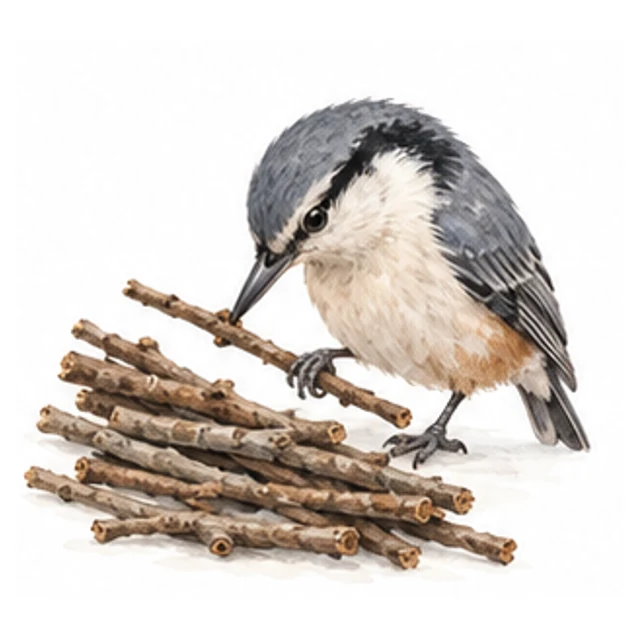
The Twig Stack Steward

Stacked twigs leave a clear perch and a job well finished.

The Twig-Bridge Foreman

A firm little bridge begins with twigs laid straight.

Bốn chữ cái trong lý thuyết kiểu tính cách

ESTJ: E (hướng ngoại: chú ý đến con người và hoạt động bên ngoài), S (cảm giác: tiếp nhận thông tin cụ thể và chi tiết hiện tại), T (tư duy: dùng tiêu chí không mang tính cá nhân khi quyết định), J (phán đoán: thích cấu trúc và kế hoạch trong đời sống bên ngoài). Trong lý thuyết này, các chữ cái mô tả khuynh hướng, không phải năng lực đã đo, khuyết điểm hay giá trị con người.

Myers & Briggs Foundation Nguồn giải thích thuật ngữ của lý thuyết, không xác nhận tính giá trị của OpenJung hay hiệu quả của các câu hỏi này.

A type description is a starting point

This result guide and its practice choices are currently shown in English.

This type page has no personal scores or recorded assessment details. Choose a practice that fits a real situation; you do not need to identify with this type.

Scores and how to read them
Choose one small practice

Pick what would help in your next conversation or decision. These are options to try, not prescriptions for a personality type.

Explore more practices

What would you like to work on?

Add a situation or time (optional)

Up to 300 characters. Local date and time, 2000–2099; past plans are allowed. No reminders.

Saved on this browser, without an account. Research and usage sharing can stay off.

Off by default; all features work with it off. Send test starts and completions (quick, full or Jev), practice and reflection saves, returns, and Jev assistance request, candidate shown, accept, dismiss, unavailable, helpful or unhelpful events to this site with random browser, event and attempt IDs. No Jev descriptions, answers, scores or results are sent; records expire within 35 days.

Retention and how to turn this off

Fictional character scenes

With cats

A moment to recharge

Puts the last toy back in its basket. Now the afternoon can officially be unplanned.

With a friend

Makes the meeting place clear, then asks what everyone would enjoy doing there.

An imagined character for a little self-expression. These scenes do not describe every person of this type or change your assessment.

Fictional character scenes

With dogs

A moment to recharge

Returns the final rope toy to its basket and surveys the tidy room with satisfaction.

With a friend

Sets out enough toys for everyone, then lets the group choose the first game.

An imagined character for a little self-expression. These scenes do not describe every person of this type or change your assessment.

Fictional character scenes

With rabbits

A moment to recharge

Lines up the seed pots, waters each once, then rests after the task.

With a friend

Hands a friend the basil pot and together they finish the sunny row.

An imagined character for a little self-expression. These scenes do not describe every person of this type or change your assessment.

Fictional character scenes

With birds

A moment to recharge

Sets the last twig on its stack, then takes a proper break.

With a friend

Divides the next bundle with a friend and carries the heavier half.

An imagined character for a little self-expression. These scenes do not describe every person of this type or change your assessment.

Fictional character scenes

With otters

A moment to recharge

Checks each twig on the bridge, then rests once the crossing holds.

With a friend

Guides a friend carrying the last branch and tests the bridge together.

An imagined character for a little self-expression. These scenes do not describe every person of this type or change your assessment.

This sources and revision note is shown in English.

Sources and editorial scope

Questionnaire results

Scores summarize questionnaire answers. Percentages are scale positions, not accuracy or the probability of being a type. A type profile without scores is not a personal assessment.

OEJTS 1.2 questionnaire (PDF) Pages 1–3: license, 32 items and scoring rules for the source questionnaire. This is not a validation study of OpenJung, its quick test or translations.

OEJTS development “Item generation and evaluation” describes selection using self-identified types; “Versions and other downloads” links to version 1.2. This is development history, not validation of this adaptation.

Type theory

Type descriptions and cognitive-function order are interpretive frameworks. This questionnaire does not directly measure functions, abilities, maturity or relationship compatibility.

Myers & Briggs Foundation: type dynamics “Terminology of Type Dynamics” and “Order of the Mental Processes” explain terms in that framework. They do not verify this site’s individual trait claims or establish personal stress mechanisms.

Myers & Briggs Foundation: the processes of type dynamics “The Eight Dominant Processes” supports the eight card definitions as theory terminology only. “Tertiary Process (Third Process)” describes disagreement about its orientation. Neither validates OpenJung or the editorial examples and questions.

Optional practice

Career questions, stress prompts and small actions are editorial suggestions to try in a real situation. They are not measured findings about you, treatments or promises of improvement. Cat scenes are fictional illustrations.

Record updated:

The recorded edits and source checks were AI-assisted (Amp). No independent expert review is recorded; this date is not a certification date.

What was checked

Function-position wording and relationship recommendations were corrected. Career and stress advice, unsourced public-figure assignments and an INFJ growth entry were also corrected. Practical copy covers English, Simplified/Traditional Chinese, Japanese and Korean, with explicit English fallback elsewhere.

The 16 profile descriptions explain the four preference letters, with concrete experience and counterexample questions. Type, result and comparison pages use the same copy in all 44 interface languages, including matching titles and search summaries. The added translations are AI-assisted and have not received independent native-language or expert review. This is not psychometric validation.

Type-page reflection prompts and the /growth guides now use shared optional practices and observation questions. The five translated guides collect three exercises and two fictional scenarios each. They do not assign function training, stress mechanisms or personal deficits by type; scenarios are labelled fictional. This is an editorial correction, not evidence that the practices are effective.

Eight cognitive-function cards now distinguish sourced definitions from hypothetical examples and optional experience/counterexample questions in five languages, with labelled English fallback. Function nicknames and ability/deficit lists were removed. Type/result, learning-card and comparison displays use explicit theory boundaries; function order and scoring are unchanged.

The learning page now uses 16 explicitly fictional scenarios with alternative explanations and a 12-question terminology/boundary bank. Each eight-question round reports correct-answer counts only. Explanations distinguish source terminology from OpenJung editorial boundaries. Overview, metadata and five-language UI use the same scope, with labelled English fallback elsewhere. This is an AI-assisted editorial revision, not expert review or validation.

The function-stack exercise now identifies matches and unlisted orders only within the site’s unchanged 16-entry mapping. Position names, opposite pairs and disputed tertiary orientation have scoped sources. Five-language instructions and keyboard interactions were checked; this is not a personal assessment or validation of the mapping.

What remains unreviewed

Type nicknames, temperament group names, and other untranslated content have not received a full source-by-source review. Lifestyle lists were removed rather than rewritten; Guess-the-Type scenes remain fictional mapping drills, not function identification. The independent mobile dataset has not been updated. These edits do not establish independent expert review or a validation study.


Report a content issue

GitHub issues are public. The draft includes only the public page, type and language—not scores, answers or private result links. Add only the relevant excerpt and source.

Các câu hỏi tùy chọn này xem xét cả hai phía của mỗi cặp khuynh hướng, không phải danh sách ưu hay khuyết điểm của bạn. Hãy nhớ một sự việc cụ thể và hoàn cảnh của nó. Một phía, cả hai hoặc không phía nào có thể phù hợp.

Đối chiếu với trải nghiệm của bạn

  • Trong cuộc trao đổi gần đây, trò chuyện với người khác có giúp bạn làm rõ suy nghĩ không?
  • Các sự kiện và chi tiết cụ thể có giúp bạn hiểu một nhiệm vụ gần đây không?
  • So sánh các tiêu chí không mang tính cá nhân có giúp bạn quyết định gần đây không?
  • Lập kế hoạch và cấu trúc có giúp bạn thực hiện một cam kết gần đây không?

Tìm cả những ví dụ không phù hợp

  • Trước cuộc trao đổi gần đây, thời gian một mình có giúp bạn làm rõ suy nghĩ không?
  • Việc tìm mối liên hệ và khả năng có giúp bạn hiểu một nhiệm vụ gần đây không?
  • Cân nhắc giá trị và tác động đến con người có giúp bạn quyết định gần đây không?
  • Giữ các lựa chọn mở và thích nghi có giúp bạn thực hiện một cam kết gần đây không?

Cognitive functions

This cognitive-function content is shown in English.

A theoretical lens on preferences; these functions are not directly measured by this questionnaire.

The order is a theoretical mapping, not measured skill or frequency. Conventions for the tertiary orientation differ.

Position terminology: Myers & Briggs Foundation (not validation of this questionnaire)

In type dynamics, “dominant” names the process given the leading role in this type’s theoretical pattern. It does not establish your strongest skill. Compare the description with your own experience.

In Myers-Briggs type-dynamics terminology, Te seeks logic and consistency in external laws and rules.

Definition source: Myers & Briggs Foundation“The Eight Dominant Processes”; definitions and terminology only, not validation of individual abilities or OpenJung.

These hypothetical examples and questions are written by OpenJung. Use or skip any prompt. Both the experience and counterexample may fit, or neither may fit. They do not measure or train cognitive functions.

Hypothetical example

Suppose a group uses stated criteria to compare three plans.

Reflect on an experience

When have shared rules helped you compare options?

Consider a counterexample

When did your own reasoning matter more than the stated criteria?

English

Career exploration questions

Try a small, realistic task or role and talk with someone who does the work. Compare options using what you learn about the tasks, training, conditions, and constraints—not your type label.

  • Which tasks hold your interest when you try them in practice?
  • Which skills do you already use, and what training would the next step require?
  • Which work conditions help you do your best work, such as pace, autonomy, teamwork, or structure?
  • Which practical constraints—such as pay, location, schedule, access, or caregiving—must a choice fit?

English

Reflect on a real situation

Start with a recent event and choose any topic. These optional editorial prompts are the same for every type, not an assessment of your traits or a sequence of maturity levels.

You can simply reflect or skip a practice that does not fit. Notice no change or other explanations too; an exercise does not guarantee improvement.

Read the reflection guide

The guide offers shared optional exercises and fictional examples, not a validated development program.

English

When stress gets in the way

These optional prompts can be used by people of any type. They do not explain or diagnose your current state.

  • If stress is getting in the way, identify the specific workload or event involved and one part you may be able to change.
  • If distress persists or disrupts daily life, consider asking someone you trust or an appropriate support service for help.

Thông tin này chỉ nhằm mục đích giáo dục và không nên được coi là tư vấn tâm lý chuyên nghiệp. Trải nghiệm cá nhân khác nhau đáng kể, và kiểu tính cách chỉ là một khía cạnh của con người bạn.